- 750g Matthews Cotswold Regenerative Stoneground Wholegrain Flour
- 750g Matthews Cotswold Stoneground Traditional White Flour
- 1125g +35g water – 77% hydration
- 24g salt
- 16g yeast
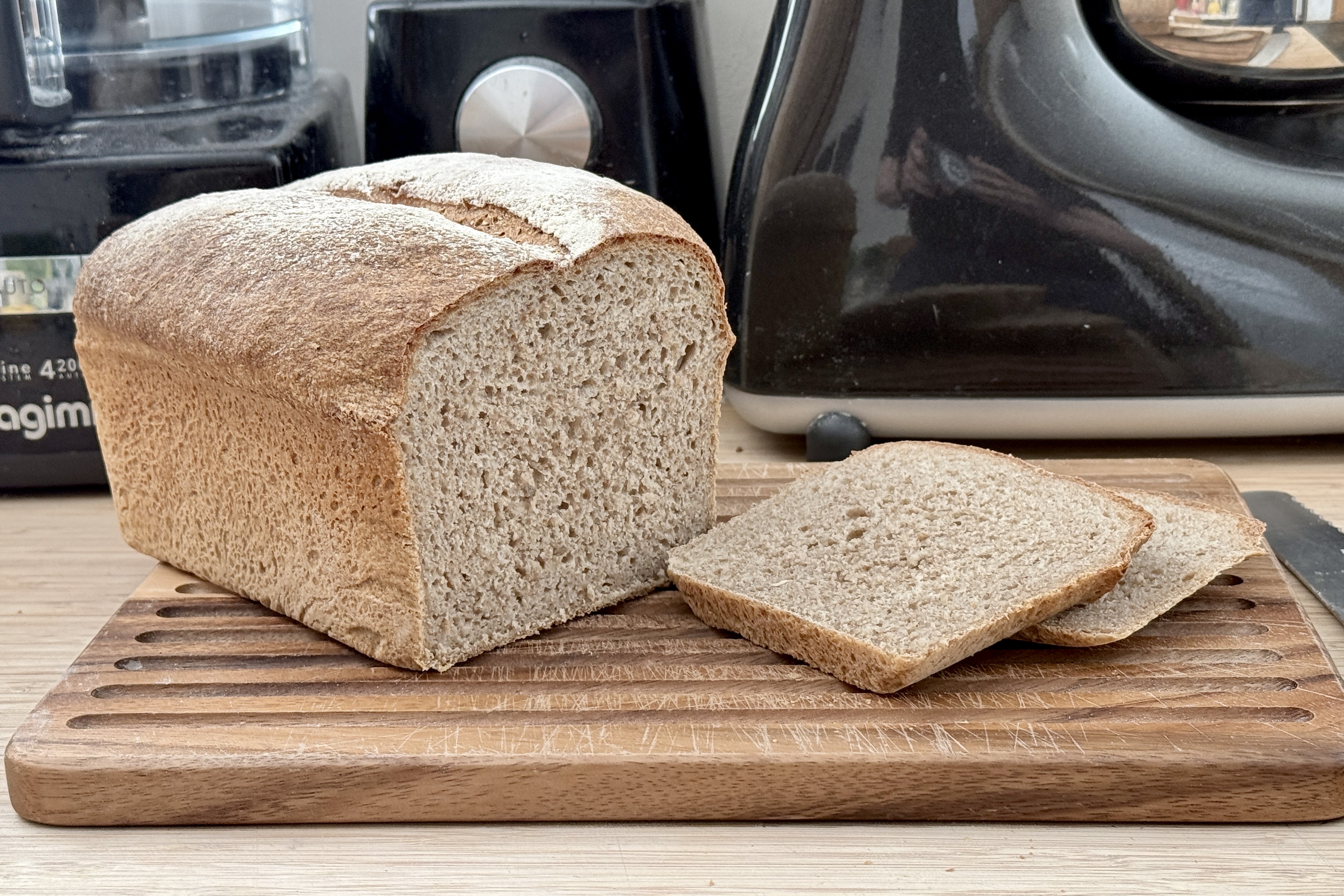
Making another double batch of loaves today (actually yesterday, I didn’t have time to post this), I wanted to use two flours I’d never tried. Both are regenerative flours, and both, being stoneground, are thirstier than normal flours. I would like to be able to make good, un-dense wholemeal loaves, and I will experiment in the future. But for now, a 50/50 loaf with stoneground white flour – which is much denser than normal white flour – can make a good, light loaf while still retaining much of the benefit of the wholemeal flour.
I started with 75% hydration, and let the flour autolyse for 30 minutes, but when I started mixing, it was clear that it was too dense, so I added another 35g of water. It smelled wonderful when mixing, and when I turned it out on my counter, it was very stretchy.
I let it bulk ferment for 30 minutes in my kitchen at 21º, then baked for 45 minutes at 200º. One problem I have when I make double batches is that I am unable to divide the dough evenly, so I have two loaves of unequal size. I could use a scale to weigh the dough, and I may try that next time, but the two loaves were very different, with one leaning over the edges of the pan a bit.

The loaves smelled delicious; even the dough smelled better than my usual doughs. There was a good amount of oven spring for loaves with half wholemeal flour. They taste great, and the crumb is excellent, better than I had expected given the types of flour used. The bread isn’t dense, though it’s not quite soft enough for sandwiches.
Leave a Reply